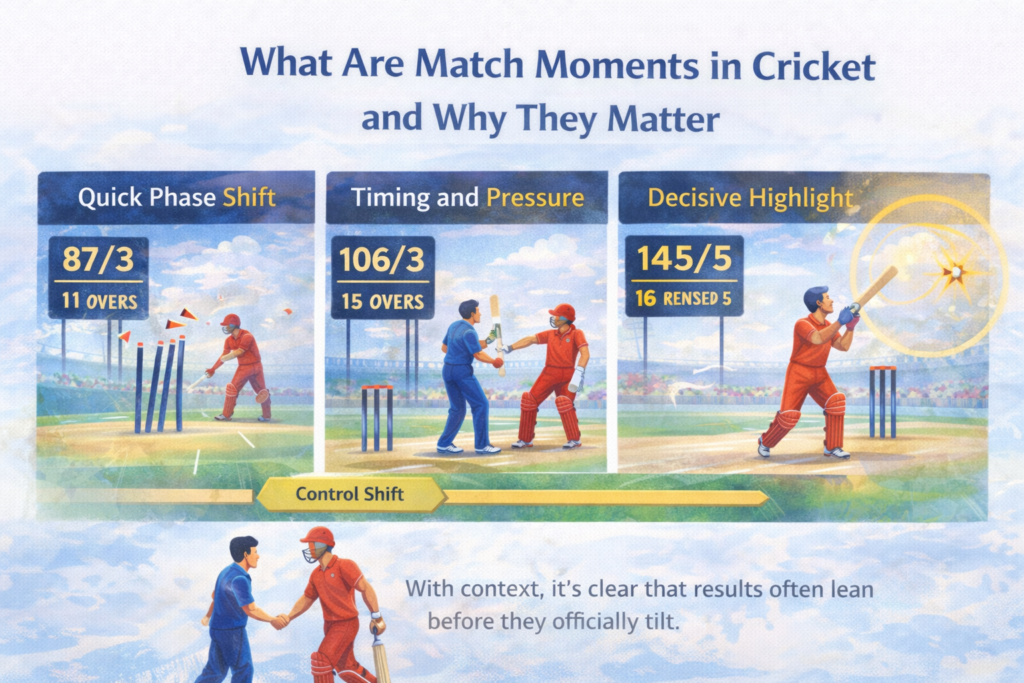
A cricket match is rarely decided by the final scoreline alone. To understand how a result forms, it helps to look beyond totals and margins and focus instead on the specific moments where control shifts from one side to the other.
These moments often pass quietly. They don’t always appear in highlight packages, but they shape the direction of the game long before the outcome becomes clear.
Understanding Match Moments Beyond the Scoreboard
Match moments are not defined by spectacle. A six into the stands or a dramatic wicket can be memorable, but significance in cricket usually comes from timing rather than impact.
A moment matters because of when it happens. A wicket during a stable partnership changes the flow. A quiet over when the run rate is climbing alters decision-making. A missed scoring opportunity adds pressure that doesn’t disappear immediately.
The scoreboard records events. Match moments explain influence.
Why Timing Changes Everything
The same event can carry different weight depending on the phase of the game. A boundary in the powerplay feels routine. The same boundary in the 17th over can reset an entire chase.
This is why match moments are closely tied to timing. They tend to occur when one side is either gaining control or struggling to maintain it. Once that balance shifts, the rest of the match often follows a predictable path.
Understanding this timing helps explain why some matches feel close on paper but controlled in reality.
Pressure Is Built, Not Created
Pressure in cricket rarely arrives suddenly. It accumulates.
A series of dot balls.
A batter forced to take fewer risks.
A fielding side tightening its options.
These sequences don’t always produce immediate results, but they limit choices. By the time a dramatic moment arrives, the conditions for it have already been set.
Match moments are often the visible outcome of pressure that has been building quietly for several overs.
Why Highlights Miss These Moments
Highlights are designed to show outcomes, not processes. They capture what happened, not why it happened.
A broken partnership might be shown as a single dismissal, without context about the overs of restraint that led to it. A final-over finish might appear decisive, even though the required rate had been climbing steadily long before.
Without understanding match moments, it’s easy to mistake the end of a story for its turning point.
What I’ve Learned Over Time
One of the most common mistakes I’ve made when analysing matches is assigning too much importance to the final act and too little to the phase before it. Over time, patterns become hard to ignore.
Matches tend to tilt first.
They finish later.
Once that distinction becomes clear, results feel less surprising and more explainable.
Why Match Moments Matter for Fans
For fans who miss a match, focusing on match moments offers clarity without overload. Instead of tracking every ball, understanding a handful of decisive phases provides a reliable picture of how the game unfolded.
It also changes how matches are remembered. Rather than recalling only who finished the game, attention shifts to where control was gained or lost.
That’s where the real story sits.
Wrapping This Up
Match moments are not always loud or obvious, but they are rarely accidental. They reflect timing, pressure, and decision-making coming together at specific points in a game.
Understanding these moments makes cricket easier to read, even without watching a single highlight. The scoreboard shows the result. Match moments explain how it became inevitable.