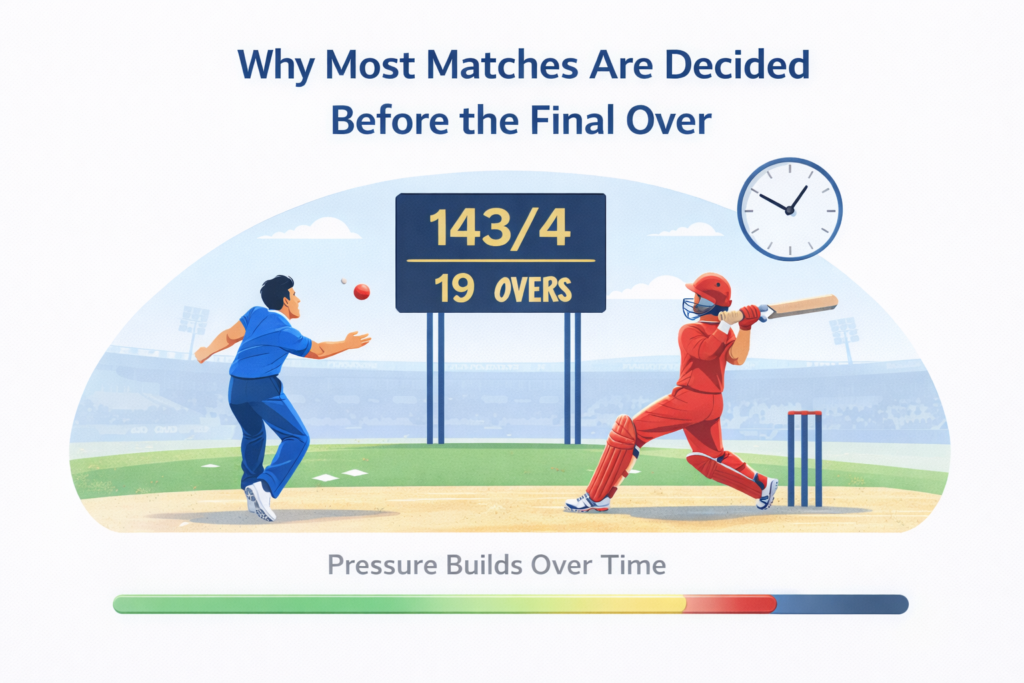
For a long time, I used to believe that matches were won or lost in the final over. It’s an easy trap to fall into. The scoreboard is tight, the cameras zoom in, and suddenly everything feels urgent.
But the more matches I’ve followed closely over the years, the less convincing that idea has become.
Here’s the thing.
The final over is dramatic, yes. But drama doesn’t equal decision.
The Illusion of the Last Over
When a match reaches the final six balls, the result looks undecided on paper. In reality, most of the hard work good or bad has already been done.
I’ve seen countless games where the chasing side needed 18 or 20 off the final over. At that point, the outcome isn’t hanging by a thread. It’s already leaning heavily in one direction. The tension is real, but the balance isn’t.
And if I’m being honest, I used to misread this myself. I’d focus on that last over and ignore what quietly went wrong ten overs earlier.
Where Matches Actually Slip Away
Look back at close games, and a pattern shows up again and again.
It’s usually the middle phase.
This is where momentum either builds or disappears. Dot balls pile up. A partnership breaks. A bowler sneaks in a quiet over that doesn’t look special in highlights but changes how the rest of the innings feels.
Once pressure starts accumulating, it doesn’t reset. It carries forward. By the time the final over arrives, that pressure has already shaped the situation.
The numbers at the end are just the outcome of earlier choices.
Pressure Isn’t Sudden. It’s Layered.
Pressure doesn’t arrive with six balls left. It creeps in.
A missed boundary option.
A run that wasn’t taken.
A fielding side sensing hesitation.
I’ve noticed that when teams talk about “handling pressure,” they’re rarely talking about the final over itself. They’re talking about surviving the five or six overs before it without panicking.
Once panic sets in, the final over becomes a formality.
Why Highlights Get This Wrong
Highlights focus on what’s loud, not what’s important.
A last-ball six is easy to sell.
A four-minute spell of disciplined bowling in the 14th over isn’t.
But those quieter moments are usually where the match tilts. They just don’t look dramatic enough at the time.
That’s why matches often feel like they were decided “at the end,” even when they weren’t.
My Personal Take
If there’s one mistake I’ve made repeatedly while analysing matches, it’s giving too much weight to the final over and not enough to the overs leading into it. The truth is less exciting but far more consistent.
Matches are shaped early.
They’re confirmed late.
Once I started watching games with that lens, the endings made a lot more sense.
Wrapping This Up
The final over tells you how a match ended.
It rarely tells you why.
If you want to understand cricket better really understand it you have to look earlier. That’s where the decisions are made, even if the drama comes later.